






Adenoidid: Complete Guide to Adenoid Inflammation, Symptoms, and Care
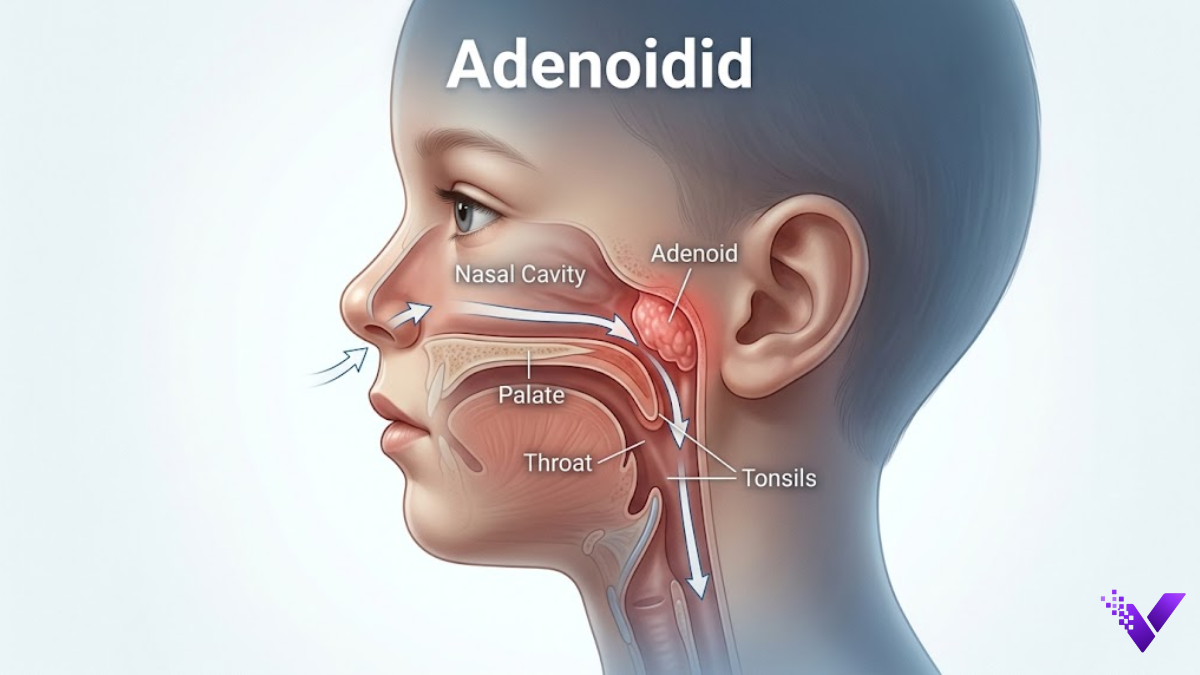
The term adenoidid appears in online searches, but it is not the standard medical name for a recognized condition. In clinical sources, inflammation of the adenoids is called adenoiditis, while excessive growth of this tissue is usually described as adenoid hypertrophy or enlarged adenoids.
The distinction matters. Infection, inflammation, allergy-related swelling, and simple enlargement can produce similar symptoms, yet their management may differ.
This guide is designed for parents, caregivers, and adults researching persistent nasal blockage, mouth breathing, snoring, recurring ear problems, or suspected adenoid disease.
What Is Adenoidid?
Adenoidid is an informal or nonstandard spelling commonly used online when people are searching for problems involving the adenoids. Medically, inflamed adenoids are described as adenoiditis.
Adenoids are collections of lymphoid tissue behind the nose, high in the throat. They contribute to immune defense during childhood by interacting with germs entering through the nose and mouth.
The basic clinical pathway looks like this:
Virus, bacteria, allergy, reflux, or tissue enlargement → Adenoid swelling → Reduced nasal airflow → Symptoms → Medical assessment → Cause-specific management
A child may have swollen adenoids during an infection without developing a long-term problem. Another child may have chronically enlarged tissue that interferes with sleep, breathing, ear ventilation, or hearing.
Why Is Adenoidid Important?
Problems involving the adenoids deserve attention because their location places them close to both the nasal airway and the openings of the Eustachian tubes.
Key consequences can include:
- Persistent nasal obstruction, making normal nose breathing difficult.
- Mouth breathing, particularly during sleep.
- Snoring or disturbed sleep when enlarged tissue narrows the upper airway.
- Middle-ear problems when nearby Eustachian tube function is affected.
- Hearing difficulties associated with persistent middle-ear fluid or repeated ear disease.
- Feeding difficulty in infants when nasal obstruction interferes with comfortable breathing.
- Reduced daytime concentration in children whose sleep is repeatedly disrupted.
- Dental or facial effects in some children experiencing prolonged mouth breathing.
Cleveland Clinic notes that significant airway obstruction from enlarged adenoids may contribute to obstructive sleep apnea, while Eustachian tube blockage may contribute to recurrent ear infections and hearing problems.
Quick Reference Matrix
| Core Element | Action / What It Involves | Primary Goal / Output |
| Adenoid location | Tissue sits behind the nasal cavity | Identify where obstruction develops |
| Symptom pattern | Review breathing, sleep, nose and ear complaints | Establish clinical significance |
| Infection assessment | Look for viral or bacterial features | Separate temporary illness from persistent disease |
| Airway evaluation | Examine degree of nasal obstruction | Determine breathing impact |
| Ear assessment | Check hearing and middle-ear function when indicated | Detect associated ear disease |
| Nasal examination | Direct visualization may be required | Assess tissue size and inflammation |
| Cause-based care | Manage infection, allergy, reflux or obstruction | Reduce the underlying trigger |
| ENT referral | Specialist assessment for persistent cases | Consider advanced evaluation or surgery |
Step-by-Step Guide to Evaluating Adenoid Problems
1. Identify the Symptom Pattern
Start with what is actually happening, not with an assumed diagnosis.
Typical symptoms associated with inflamed or enlarged adenoids can include blocked nose, runny nose, mouth breathing, snoring, postnasal drainage, sore throat, fever, and feeding difficulties in infants.
Track four areas:
- Nasal symptoms: blockage, discharge or inability to breathe comfortably through the nose.
- Night symptoms: snoring, restless sleep or witnessed breathing interruptions.
- Ear symptoms: repeated infections, muffled hearing or persistent ear pressure.
- Illness timing: sudden onset versus symptoms lasting for weeks or recurring repeatedly.
Duration often tells a clinician more than one isolated symptom.
2. Separate Acute Illness From Persistent Obstruction
A short episode following a cold may behave differently from months of nasal blockage.
Acute adenoiditis may develop alongside or after an upper respiratory infection. Viruses are frequent causes, and bacterial infection may sometimes follow. Allergies and laryngopharyngeal reflux can also irritate adenoid tissue.
Persistent obstruction raises additional questions, including whether the tissue remains enlarged after the original illness has resolved.
A clinician will often consider:
| Pattern | Clinical Question |
| Sudden congestion with fever | Could infection be driving the swelling? |
| Seasonal symptoms | Could allergy be involved? |
| Long-term mouth breathing | Is structural obstruction present? |
| Nighttime breathing disturbance | Is the airway narrowing during sleep? |
| Repeated ear complaints | Is middle-ear ventilation being affected? |
3. Perform a Clinical Examination
Adenoids are not normally visible simply by opening the mouth, because they sit behind the nasal cavity.
A healthcare professional may assess the nose, throat, ears, tonsils, lymph nodes and breathing pattern.
When additional visualization is needed, a clinician may use nasal endoscopy, which involves a thin flexible instrument equipped with a light and camera. Cleveland Clinic also notes that testing may include a throat culture or allergy evaluation when clinically appropriate.
The goal is not simply to prove that adenoid tissue exists. The clinician wants to determine whether its condition explains the patient’s symptoms.
4. Investigate Hearing and Ear Effects When Necessary
The adenoids sit close to the Eustachian tubes, which help regulate pressure between the middle ear and the back of the nose.
Enlargement in this region can interfere with normal ventilation. NHS guidance identifies glue ear and recurrent ear infections among problems associated with enlarged adenoids.
Depending on the presentation, assessment may include:
- Examination of the eardrum.
- Evaluation for middle-ear fluid.
- Age-appropriate hearing testing.
- Review of speech or school concerns when hearing impairment has been prolonged.
Hearing evaluation becomes particularly relevant when a child frequently asks for repetition, increases device volume, or appears inattentive despite otherwise normal development.
5. Match Treatment to the Cause
There is no single treatment that fits every case.
A mild viral illness may improve as the infection clears. Bacterial disease may require clinician-prescribed antibiotics, while allergy-related inflammation may be managed with treatments such as antihistamines or nasal corticosteroids when a healthcare professional considers them appropriate.
The decision process can be simplified as:
Identify cause → Measure symptom burden → Use appropriate nonsurgical treatment → Reassess response → Escalate persistent cases
Self-starting leftover antibiotics is poor practice. Antibiotics do not treat viral infections, and the correct drug depends on the clinical situation.
6. Consider ENT Assessment for Persistent Problems
Persistent nasal obstruction, recurrent disease, significant sleep symptoms, or associated hearing problems may justify assessment by an ear, nose and throat specialist.
An ENT clinician can evaluate whether symptoms are caused primarily by:
- Adenoid enlargement.
- Tonsillar enlargement.
- Nasal allergy.
- Chronic sinus disease.
- Structural nasal obstruction.
- Another upper-airway condition.
This distinction becomes important before surgery is considered.
7. Understand When Adenoidectomy Enters the Discussion
An adenoidectomy removes adenoid tissue under anesthesia.
It may be considered when enlarged adenoids cause substantial problems such as persistent nasal obstruction, sleep-disordered breathing, selected middle-ear problems or recurrent symptoms that have not improved adequately with conservative management.
Surgery is not automatically required because an adenoid appears enlarged.
Age, symptom severity, sleep quality, ear disease, previous treatments and the overall ENT examination all contribute to the decision.
The NHS notes that adenoidectomy complications are uncommon but can include bleeding, infection, temporary voice changes, breathing problems from swelling and, uncommonly, regrowth of adenoid tissue.
Adenoid Problems in Different Clinical Scenarios
Young Children With Frequent Colds
Children encounter many respiratory viruses, particularly when entering nursery or school.
Adenoid tissue is also proportionally significant during childhood. Cleveland Clinic reports that adenoiditis is particularly common around ages 3 to 7, when children experience frequent respiratory infections and adenoid tissue is relatively prominent.
The challenge is distinguishing ordinary repeated childhood infections from a persistent obstruction requiring further assessment.
Children With Sleep Problems
A child who snores occasionally during a cold is different from one who habitually snores, struggles to breathe at night, or has observed pauses in breathing.
Enlarged adenoids and tonsils can contribute to sleep-disordered breathing. NHS guidance lists sleep apnea among conditions for which adenoid surgery may sometimes be considered.
Sleep symptoms deserve proper assessment because nighttime airway problems may not be obvious during a daytime examination.
Children With Hearing or Speech Concerns
Middle-ear fluid can reduce how efficiently sound reaches the inner ear.
For a child learning language, prolonged hearing difficulty may affect communication, classroom performance or speech development.
The correct pathway is an ear and hearing assessment, rather than assuming every hearing concern originates from adenoids.
Adults With Suspected Adenoid Enlargement
Adenoid tissue generally becomes smaller with age, making clinically significant adenoid disease much less common in adults.
Persistent adult nasal obstruction therefore deserves appropriate medical evaluation instead of being automatically attributed to childhood-type adenoid disease.
An ENT specialist may need to exclude more common explanations and, in selected situations, investigate unusual tissue growth.
Adenoiditis vs Enlarged Adenoids
| Factor | Adenoiditis | Enlarged Adenoids |
| Primary feature | Active tissue inflammation | Increased tissue volume |
| Typical onset | Often linked with illness or irritation | May develop gradually |
| Fever | Can occur | Not required |
| Sore throat | More compatible | May be absent |
| Long-standing snoring | Possible | Often a major complaint |
| Nasal airflow | Temporarily or persistently reduced | Often chronically restricted |
| Main diagnostic focus | Source of inflammation | Mechanical effect of tissue size |
| Management direction | Treat contributing cause | Assess functional obstruction |
The two conditions can occur together, so this table should not be used for self-diagnosis.
Common Mistakes and Best Practices
Common Mistakes to Avoid
- Treating snoring as harmless by default. Persistent snoring accompanied by breathing pauses needs medical evaluation.
- Assuming every blocked nose is an adenoid problem. Rhinitis, sinus disease and structural nasal conditions can produce overlapping symptoms.
- Using antibiotics without clinical guidance. Viral inflammation will not improve because an antibacterial medicine was taken.
- Ignoring hearing changes. Children do not always recognize or describe mild hearing loss themselves.
- Judging severity by adenoid size alone. Functional impact matters more than a number viewed in isolation.
- Applying adult assumptions to children. Pediatric airways, immune tissue and developmental needs differ substantially.
- Relying only on internet photographs or symptom checkers. Adenoids sit in an anatomical location that usually requires proper examination.
How to Maximize Efficiency / Best Practices
- Keep a seven-to-fourteen-day symptom log before a nonurgent medical appointment.
- Record whether snoring happens every night, only during illness, or in specific sleeping positions.
- Note school observations involving hearing, concentration or daytime sleepiness.
- Bring a complete list of medicines, nasal sprays and allergy treatments already tried.
- Tell the clinician about secondhand smoke exposure, because respiratory irritants can aggravate upper-airway symptoms.
- Bring previous hearing-test or ENT records when seeking a second assessment.
- Ask what clinical finding would change the treatment plan rather than focusing only on the tissue’s appearance.
Future and Modern Trends in Adenoid Care
The management of adenoidid-related searches and clinically diagnosed adenoid disorders is shifting toward more precise evaluation rather than automatic surgery.
Flexible nasal endoscopy gives specialists direct visualization of the nasopharynx. Sleep-focused assessment is also becoming more relevant when the main complaint occurs at night instead of during daytime examination.
Treatment decisions increasingly separate infection, allergy, sleep-disordered breathing, middle-ear disease and anatomical obstruction instead of grouping every child with a blocked nose under one diagnosis.
Another change is stronger attention to functional outcomes. Clinicians may examine sleep quality, hearing, communication and daily behavior alongside physical findings before deciding whether conservative care or surgery is appropriate.
Practical Appointment Checklist
Use this before speaking with a pediatrician, family doctor or ENT specialist:
- Record the date symptoms first appeared.
- Note whether nasal blockage affects one side or both sides.
- Document the number of ear infections during the past year.
- Ask teachers or caregivers whether they have noticed hearing difficulty.
- Write down any observed nighttime breathing pauses.
- Note whether symptoms continue when the child is completely free from colds.
- List known allergies and environmental triggers.
- Bring details of previous antibiotic or nasal-spray treatment.
- Mention any history of previous tonsil, adenoid or ear procedures.
- Prepare questions about expected benefits, limitations and alternatives before consenting to surgery.
Final Thoughts
The biggest point to understand about adenoidid is terminology. The search phrase may lead people toward useful information, but adenoiditis and adenoid hypertrophy are the recognized clinical concepts that healthcare professionals diagnose and treat.
Persistent breathing, sleep or hearing symptoms deserve assessment based on their cause and functional impact, not simply on a search term. Most temporary illnesses improve, while chronic or significant problems may require pediatric or ENT evaluation.
Frequently Asked Questions – FAQs
Is adenoidid an official medical diagnosis?
No. Adenoidid is not the standard clinical spelling used by major medical references. People searching the term are commonly looking for information about adenoiditis, adenoid inflammation or enlarged adenoids.
At what age are adenoids usually largest?
Adenoids are primarily important during childhood and gradually become less prominent with age. NHS clinical guidance notes that they typically enlarge during early childhood and shrink progressively toward adulthood.
Can adenoids grow back after surgery?
Some adenoid tissue can remain after an operation, and regrowth can occur, although the NHS describes this as uncommon. A return of nasal symptoms after surgery does not automatically prove regrowth because other nasal conditions can produce similar complaints.
Are adenoids the same as tonsils?
No. Both are forms of lymphoid tissue, but they occupy different anatomical locations. Tonsils can usually be seen at the sides of the throat, while adenoids sit higher up behind the nasal cavity.
Can someone live normally without adenoids?
Yes. Adenoidectomy does not remove the entire immune system. Cleveland Clinic notes that other parts of the immune system continue providing protection after adenoids are removed.
Can enlarged adenoids change a child’s voice?
They can affect nasal resonance when airflow through the nose is restricted. Voice changes may also occur temporarily following adenoid surgery, with NHS guidance stating that postoperative voice changes generally settle over the following weeks.
When should breathing symptoms receive urgent medical attention?
Seek urgent medical help when a child has severe difficulty breathing, turns blue or unusually pale, becomes difficult to wake, or shows another sign of serious respiratory distress. After an adenoidectomy, NHS guidance advises emergency assessment for bleeding from the nose or throat, or blood appearing in vomit.
Note: This Content Is Only Information Write No Check Home